Category: Wisdom

  • The Tongue And Its Power

    The Tongue And Its Power

    "The tongue has the power of life and death, and those who love it will eat its fruit." - Proverbs 18:21
    “The tongue has the power of life and death, and those who love it will eat its fruit.” – Proverbs 18:21

    Prov 6:16-19
    16 There are six things the Lord hates, seven that are detestable to him:
    17 haughty eyes, a lying tongue, hands that shed innocent blood,
    18 a heart that devises wicked schemes, feet that are quick to rush into evil,
    19 a false witness who pours out lies and a man who stirs up dissension among brothers.

    The Tongue’s Actions Determine God’s Feeling About Us

    One of the things I appreciate about my mother is that she had deep convictions about lying.  I would not get in too much trouble if I was honest about the what I did and the parties I went to.  If I lied though, mom would “lose it,” stiffen the penalties, and the punishment would often become double or more.  This is because lying to someone who loved me so much was very hurtful to them, and offensive to her, and she understandably took it very personally.  This disposition around lying stuck with me. Therefore, it has helped me understand God and personally connect to scriptures like this one.

    Most importantly, God emotionally and intensely reacts to me if I use my tongue to lie.  If I stir up people against each other or cause problems with my words God hates it.  The Hebrew word “sane’” here does really mean “to hate (personally).”  The Hebrew word translated as “detestable” here is “tow`ebah, and means “a disgusting thing, an abomination.”  God takes how I speak very personally. It’s because his love is so deep that he cares this much about what comes out of our mouths.  Love always “rejoices with the truth” (1 Corinthians 13:6) and God is love” (1 John 4:8), therefore this intense reaction from God makes sense.

    Prov 6:23-24
    23 For these commands are a lamp, this teaching is a light, and the corrections of discipline are the way to life, keeping you from the immoral woman, from the smooth tongue of the wayward wife.

    The Tongue’s Powers Must Be Protected Against

    The best defense we have against someone using their tongue to seduce or entice us to sin are the commands of God.   Besides, if we spend time filling ourselves up with God’s word, when (not “if”, but when) we are enticed by a “smooth tongue,” we’ll be prepared.  A “smooth tongue” is contrasted here with the commands of God.  The “smooth tongue” being darkness and “leading down to the chambers of death” (Proverbs 7:27).  The commands of God being “a lamp,” a “light,” and “the way to life.”  Who am I going to listen to?  Sometimes my own “self-talk” from my heart and thoughts is dark and would lead me to death, persuaded to sin, and disbelief.  How can “take captive every thought to make it obedient to Christ?” (2 Corinthians 10:5)

    Consequently, the biblical way to keep myself pure and to guard my steps like this is to memorize the scriptures and having them “hidden…in my heart.” :

    Ps 119:9-11
    9 How can a young man keep his way pure? By living according to your word.
    10 I seek you with all my heart; do not let me stray from your commands.
    11 I have hidden your word in my heart that I might not sin against you.

    Prov 10:19-20
    19 When words are many, sin is not absent, but he who holds his tongue is wise.
    20 The tongue of the righteous is choice silver, but the heart of the wicked is of little value.

    The Tongue Can Be Used Too Much

    Clearly, we see all of us can choose to use our tongue to lie, to entice, and to seduce.  Furthermore, we can use our tongue simply too much – by talking more than is necessary. The scriptures teach us “when words are many” there is some kind of sin we are covering for.  Rationalizing, excuse-making, and deceiving all take more words to make work than the truth.  The scriptures caution us “A gossip betrays a confidence, so avoid a man who talks too much.” (Proverbs 20:19)  I need to make sure that I am not that man who uses words to manipulate and defend himself.  I can often over-explain which comes from insecurity, which can come from a lack of faith, or a self-focus, or a troubled conscience.  Finally, it’s important for me, and all of us, to identify whatever is causing us to use “many words” when this comes up.

    The heart of the righteous weighs its answers, but the mouth of the wicked gushes evil. (Proverbs 15:28)
    The heart of the righteous weighs its answers, but the mouth of the wicked gushes evil. (Proverbs 15:28)

    Similarly, this “economy of words” is something the ancient Spartans famously demonstrated in their culture.  “Lakonia” is the name of the ancient region of Greece in the southeastern part of the Peloponnese peninsula.  This region’s capital was (and still is) the city of Sparta. The word “laconic,” has come to mean both from this region and to thoughtfully use the least amount of words possible.  Such was the practice of the ancient Spartans. Another thing I find is that the truth takes much fewer words and makes for a lighter heart and clearer head. Most importantly, it also brings me into fellowship and closeness with those around me and gets me in touch with grace – both given and received. (1 John 1:5-10)

    Prov 17:28
    28 Even a fool is thought wise if he keeps silent, and discerning if he holds his tongue.

    The Tongue Speaks What The Heart Is Full Of

    What will I use my tongue for today?  How will it affect God’s view of me? How will it affect those around me?  What does it indicate about my own heart? Jesus said, “for the mouth speaks what the heart is full of.” (Luke 6:45)  What will I fill my heart with today and what impact will it have?  What will it bring forth from my heart – wisdom or perversity, a piercing sword or healing?  Consequently, will it help me endure forever…or only last a moment?

    Prov 10:31
    31 The mouth of the righteous brings forth wisdom, but a perverse tongue will be cut out.
    Prov 12:18-19
    18 Reckless words pierce like a sword, but the tongue of the wise brings healing.
    Prov 11:12,19
    12 A man who lacks judgment derides his neighbor, but a man of understanding holds his tongue.
    19 Truthful lips endure forever, but a lying tongue lasts only a moment.

    Dare I speak the truth from my heart, good or bad? Even more, will I get in touch with where I actually am in my relationships – with God and with others?  Or will I decide to “gush folly” and avoid the issues? There is no hope in a deceitful tongue. Additionally, there is no healing in a deceitful tongue, only crushing my spirit – and others!

    Prov 15:2
    2 The tongue of the wise commends knowledge, but the mouth of the fool gushes folly.
    Prov 15:4
    4 The tongue that brings healing is a tree of life, but a deceitful tongue crushes the spirit.
    Prov 17:20
    20 A man of perverse heart does not prosper; he whose tongue is deceitful falls into trouble.

    The Tongue That Deceives

    A deceitful tongue is the result of a perverse heart.  When I’ve made the conscious decision to lie, it was always to get ahead.  Often, I wanted something for nothing and acted selfishly.

    As a result, when I was a teenager I stole some chips capriciously from the storefront display at the corner convenience store.  I lied when I got caught, saying that I thought the friend with me had paid for the chips when he went to the counter. I recall another moment when lied to my jazz guitar teacher, saying I was so broke I could not afford gas that week and could I pay him later.  He shrewdly exposed me and I’ll never forget the look on his face when he realized I was trying to take him for 20$. That was the price deceit and selfishness put on that friendship. Please forgive me, Eric. Certainly, even if I would have made a fortune, it would never be worth it!  “A fortune made by a lying tongue is a fleeting vapor and a deadly snare.” (Proverbs 21:6)

    Prov 26:28
    28 A lying tongue hates those it hurts, and a flattering mouth works ruin.
    Prov 16:1
    To man belong the plans of the heart, but from the Lord comes the reply of the tongue.
    Prov 17:4
    A wicked man listens to evil lips; a liar pays attention to a malicious tongue

    The Tongue That Replies Well

    Furthermore, God can guide me to reply well.  I can pray to him for help, for guidance, for an apt and wise reply.  I can listen to his word, his “lips,” and avoid my own self-deception.  Sometimes the most malicious tongue is my own, tearing me down in my head, and it is wicked to listen to that inner voice of self-doubt in my heart!  This is a choice I make! I must instead decide to listen to the Lips of God, the Word of God, and put its truth in my head and heart! “I reach out for your commands, which I love, that I may meditate on your decrees.” (Psalm 119:48)  “Oh, how I love your law! I meditate on it all day long.” (Psalm 119:97)  What will I meditate on?  Whose lips shall I listen to?

    My son, if you accept my words and store up my commands within you,  turning your ear to wisdom and applying your heart to understanding,  and if you call out for insight and cry aloud for understanding, and if you look for it as for silver and search for it as for hidden treasure, then you will understand the fear of the Lord and find the knowledge of God. (Prov 2:1-5)
    My son, if you accept my words and store up my commands within you, turning your ear to wisdom and applying your heart to understanding, and if you call out for insight and cry aloud for understanding, and if you look for it as for silver and search for it as for hidden treasure, then you will understand the fear of the Lord and find the knowledge of God. (Prov 2:1-5)

    Prov 25:15
    15 Through patience a ruler can be persuaded, and a gentle tongue can break a bone.
    Prov 25:23
    23 As a north wind brings rain, so a sly tongue brings angry looks.
    Prov 28:23
    3 He who rebukes a man will in the end gain more favor than he who has a flattering tongue.
    Prov 31:26
    26 She speaks with wisdom, and faithful instruction is on her tongue.

    The Tongue Can Heal, Endure, And Wisely Instruct

    The tongue can be used for many things.  It has all manner of incredible power in our lives and the lives of those around us.  The tongue can be deceitful, persuasive, sly, flattering, smoothly seductive, and in its gentleness, even break bones!  Incidentally, according to the bible, it is not sticks and stones that break bones – it is the words spoken by a gentle tongue!  The tongue can commend knowledge and bring healing! It can help one endure forever and bring forth faithful instruction and very the wisdom of God!

    The scriptures are true –
    “The tongue has the power of life and death, and those who love it will eat its fruit.” (Proverbs 18:21)

    Finally, may all of us love the tongue, and “[speak] the truth in love, sowe will grow to become in every respect the mature body of him who is the head, that is, Christ.” (Ephesians 4:15) To God be the Gory!

    Jeremy Ciaramella
    Evangelist,
    Phoenix International Christian Church

  • The Fear of the LORD

    The Fear of the LORD

    "The

    The Fear of the LORD Drives Out The Mocker

    Prov 9:7-9
    7 “Whoever corrects a mocker invites insult; whoever rebukes a wicked man incurs abuse.
    8 Do not rebuke a mocker or he will hate you; rebuke a wise man and he will love you.
    9 Instruct a wise man and he will be wiser still; teach a righteous man and he will add to his learning.

    • Do I have the Fear of the Lord? Do I love those who rebuke me?  A brother rebuked me harder than I can ever recall being rebuked earlier this year at the 2016 Global Leadership Conference.  Those 45 minutes saved my life and forcefully reminded me how serious being lukewarm truly is.  Furthermore, It is clear that things have definitively turned a corner both in our life and ministry because of that rebuke.
    • I must always add to my learning.  That humble mindset must never stop.  If I ever think I’ve “arrived” because I have some role or been a disciple for 20+ years now – I am a fool!

    This is still wisdom speaking and “she” clarifies – what will make me a mocker will be lacking the Fear of the LORD.

    Prov 9:10-12
    10 “The fear of the Lord is the beginning of wisdom, and knowledge of the Holy One is understanding.
    1 For through me your days will be many, and years will be added to your life.
    12 If you are wise, your wisdom will reward you; if you are a mocker, you alone will suffer.”

    • Clearly the scriptures repeat this theme: “the fear of the LORD is the beginning of knowledge.”  If I stop fearing God, I stop being wise and will NOT have understanding.  If I don’t Fear the Lord I’ll become that abusive “mocker” and as a result I alone will suffer!  I’ll even resent those that disciple me.  because of these things – I want to understand the “Fear of the LORD.”

    The Fear of the LORD has many facets

    Fearing The Lord has Many Facets
    Fearing the Lord is like a diamond – it has many sides (facets)!

    The Fear of the LORD creates peace & sacrifice (tribute)

    2 Chron 17:10-11
    10 The fear of the Lord fell on all the kingdoms of the lands surrounding Judah, so that they did not make war with Jehoshaphat. 11 Some Philistines brought Jehoshaphat gifts and silver as tribute, and the Arabs brought him flocks: seven thousand seven hundred rams and seven thousand seven hundred goats.

    • Someone who does not fear the LORD is hostile.  Therefore someone who fears the LORD is a peacemaker.  Am I that hostile mocker or a peacemaker?  Which is more important to me, victory in the argument or the relationship?  Would I walk away from God because of a strained relationship?  If so, then I don’t fear the LORD.
    • Someone who does not fear the LORD will not sacrifice because they will not have the heart to give a tribute to God.  Those that fear God sacrifice tribute(s) to Him.

    The Fear of the LORD creates integrity and discernment.

    2 Chron 19:4-7
    4 Jehoshaphat lived in Jerusalem, and he went out again among the people from Beersheba to the hill country of Ephraim and turned them back to the Lord, the God of their fathers. 5 He appointed judges in the land, in each of the fortified cities of Judah. 6 He told them, “Consider carefully what you do, because you are not judging for man but for the Lord, who is with you whenever you give a verdict. 7 Now let the fear of the Lord be upon you. Judge carefully, for with the Lord our God there is no injustice or partiality or bribery.”

    • The king PERSONALLY went among the people to turn them back to the LORD.  He called the local judges to FEAR GOD, so they would have integrity and “careful judgment.

    The Fear of the LORD is the backbone of faithful and wholehearted service.

    2 Chron 19:8-10
    8 In Jerusalem also, Jehoshaphat appointed some of the Levites, priests and heads of Israelite families to administer the law of the Lord and to settle disputes. And they lived in Jerusalem. 9 He gave them these orders: “You must serve faithfully and wholeheartedly in the fear of the Lord. 10 In every case that comes before you from your fellow countrymen who live in the cities — whether bloodshed or other concerns of the law, commands, decrees or ordinances — you are to warn them not to sin against the Lord; otherwise his wrath will come on you and your brothers. Do this, and you will not sin.”

    • Without the Fear of the LORD, there will not be a faithfulness nor wholeheartedness.

    The Fear of the LORD is pure and helps one persevere.

    The Fear of the Lord is Pure.
    The Fear of the Lord is Pure.

    Ps 19:9
    9 The fear of the Lord is pure, enduring forever.

    • Fearing God is “clean.”  If I am struggling with purity it is because I do not have the fearing God.  If I lacking endurance and thinking about quitting my faith, my God, his body (the church), then I must see I do not fear the LORD any longer.  Fear the LORD and persevere!

    The Fear of the LORD is the beginning of wisdom and knowledge.

    Ps 111:10
    10 The fear of the Lord is the beginning of wisdom; all who follow his precepts have good understanding.  To him belongs eternal praise.
    Prov 1:7
    The fear of the Lord is the beginning of knowledge, but fools despise wisdom and discipline.

    • David taught his son Solomon this truth about the Fear of the LORD.  In Psalm 34:1 (of David) he sings/says, “Come, my children, listen to me; I will teach you the fear of the Lord.”  Am I teaching my children the Fear of the LORD?  Would they say they see these things in my day-to-day example?  If I ask my 4-year-old son or my 9-year-old daughter, “Do you think daddy fears the LORD?  Why?” what would they say?  What in my day-to-day example would show them the Fear of the Lord?  This is because I too want to train my children!  I cannot train my children in something they do not see an example of!
    • If there is not a FEAR of the LORD, then there is no beginning of knowledge or wisdom!  Conversion becomes just an act and the church is just another stage to perform on!  Discipleship then becomes a crutch instead of a real call for us to become more like Jesus.

    The Fear of the LORD takes Serious Effort to Understand

    The Fear of the LORD is understood by (1) searching & (2) accepting God’s word, (3) memorizing it, (4) applying it, and (5) praying for understanding.
    Prov 2:1-5
    1 My son, if you accept my words and store up my commands within you,
    2 turning your ear to wisdom and applying your heart to understanding,
    3 and if you call out for insight and cry aloud for understanding,
    4 and if you look for it as for silver and search for it as for hidden treasure,
    5 then you will understand the fear of the Lord and find the knowledge of God.

    • It’s not like one day I just miraculously understood the Fear of the LORD.  I had to study the bible out with disciples who would explain it to me and call me to apply it.  There were many times in my life I have study or heard the bible, searched it, memorized it, but did not apply or accept it.  Every one of these 5 mentioned steps are important.  It is critical that I “accept[ed] [God’s] words.” This is because I did not want to admit I’d never truly obeyed God’s words or held to Jesus’ teachings despite years of churchgoing and a myriad of religious experiences.  (John 8:31-32).  I had to “turn [my] ear to wisdom” and “apply [my] HEART to understanding.”  And I still must do all these things today – once you start, you can’t stop or slouch.  Trust me – you’ll get lukewarm.  The only thing that made accepting and apply God’s word possible was dealing with all my emotions (my heart) when there was persecution, confusion, selfishness, and anger coming at me and out of me.  There is no way to apply my heart to understanding if I don’t even get in touch with what I am feeling about things in my life.

    Understanding The Fear of the LORD takes Serious Prayer

    This is why I need to cry aloud for understanding.  This is why I need to search my heart in deep prayer.  Then I need to search the scriptures like I’m on a treasure hunt.  The soul-searching is worth it, as it’s the key to even understanding the Fear of the LORD.  This is the beginning of wisdom (Prov 9:10) The honesty, the searching, the crying out and transparency are all worth it.  This is because the Fear of the LORD adds length to life (Prov 10:27), is a fountain of life (Prov 14:27), helps me avoid evil (Prov 16:6), causes contentment (Prov 19:23), is the key to humility, honor, and life (Prov 22:4).

    The Fear of the LORD is something Jesus Christ delights in.

    Isa 11:1-3
    1 A shoot will come up from the stump of Jesse; from his roots a Branch will bear fruit.
    2 The Spirit of the Lord will rest on him — the Spirit of wisdom and of understanding, the Spirit of counsel and of power, the Spirit of knowledge and of the fear of the Lord —
    3 and he will delight in the fear of the Lord.

    • In this prophecy about Jesus, we learn that he delights in the Fear of the LORD. If I am to follow Jesus, then I too – like my “LORD” Jesus – will delight in the Fear of the Lord.

    The Fear of the LORD is the key to salvation, wisdom, and knowledge.

    Fearing the LORD is the key to salvation.
    The Fear of the LORD is the key to salvation.

    Isa 33:5-6
    5 The Lord is exalted, for he dwells on high; he will fill Zion with justice and righteousness.
    6 He will be the sure foundation for your times, a rich store of salvation and wisdom and knowledge;  the fear of the Lord is the key to this treasure.

    • If I do not have the Fear of the LORD I will not be saved.  I have no key to salvation. No wonder Jesus’ delights in the Fear of the LORD! Jesus came to seek and save the lost! (Luke 19:10)

    The Fear of the LORD is the key to the church impacting lives.

    Acts 9:31
    31 Then the church throughout Judea, Galilee and Samaria enjoyed a time of peace. It was strengthened; and encouraged by the Holy Spirit, it grew in numbers, living in the fear of the Lord.

    • Because the church lived in the Fear of Lord it grew in numbers.  Therefore I must ask myself – “will I?” For if my life is not having impact, I have to ask myself, “am I really living in the Fear of the LORD?”  Do I understand the Fear of the LORD biblically or am I letting my culture or religious/sentimental notions define it?  Sometimes there is an aversion to fearing the LORD because it implies things like wrath, punishment, and God’s discipline.  But in studying the Fear of the LORD, we see not a single scriptural reference has these notions in it.  When I was a child, the fear of my mother was sometimes enough to make me think twice.  She’d discipline me best she could as a mother and I respected her for that.  She taught me to love truth and emphasized the need for transparency in my life.  These were some of the elements that helped me do the soul-searching I needed to do to have a “real” relationship with God.  The love of truth and transparency are both powerful scriptural principles (cf. 1 John 1:5-10).  If I focus on God and what God is teaching me and if I seek God, then the Fear of the LORD will be something I can understand properly.  Clearly, this pursuit is more than worth it.  This is because the impact is eternal, both on my soul and countless other souls.

    Amen.

    Jeremy Ciaramella
    Jeremy Ciaramella

  • Diligence and It’s Impact – Proverbs 10

    Diligence and It’s Impact – Proverbs 10

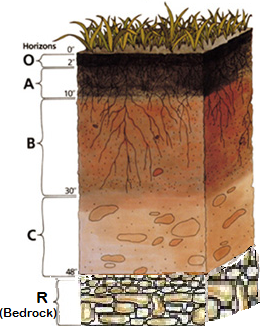
    Diligently build on the deep bedrock of "Jesus Is Lord!"
    Diligence: building on the deep bedrock of “Jesus Is Lord!”
    Prov 10:4
    4 Lazy hands make a man poor, but diligent hands bring wealth.
    – Diligence is a key concept throughout the bible, not just in proverbs! Am I diligent!? Diligent: “having or showing care and conscientiousness in one’s work or duties.” What am I diligent for? Money or true riches? What motivates me to be diligent? Is it just accountability (“…they are going to ask me about that, so…”) or is it a consciousness of the very presence of the All-mighty God? A sensitivity to the expectations of man or a sensitivity to the Holy Spirit living in me? Why be diligent I suppose ties into what I am going to be diligent about.

    Prov 10:1
    The proverbs of Solomon:
    A wise son brings joy to his father, but a foolish son grief to his mother.
    – Why? A dad can move on, let the boy do his own thing with the lingering disappointment in it…but mom? She’s devastated by her son who does evil. He was the apple of her eye, he was that “..beautiful, beautiful, boy…”. A wise son is diligent.

    Prov 10:9
    9 The man of integrity walks securely, but he who takes crooked paths will be found out.
    – When I feel that “pang” of fear when I am driving? That’s because I’ve not driven with integrity, obeying the speed limit in particular.
    – When our finances have spiraled out of control? I’ve wanted a standard of living for me and mine. On that, our standard of living has nothing to do with our income, it has everything to do with the joy we share and show our family, our spouses, our children. We TEACH them what to be happy about, we TEACH them what counts in this life, we TEACH them and LEAD them (husbands->wives, wives->Children) by our example(s). There are many in much lower standards of living than a “typical” disciple living in the USA that are much, much more joyful. The standard of living is not based on income, accouterments of wealth, education, retirement planning, citizenship and/or our credit score. The standard of living is based on God, and he’s based on love, and spells this standard out in His Truth, the bible. To strive for a higher standard of living is not to increase income, but to increase our spiritual standard and focus on the things that are eternally important. This is how to avoid a crooked path, and walk with God with integrity. It takes diligence to have integrity.

    Prov 10:12
    12 Hatred stirs up dissension, but love covers over all wrongs.
    – LOVE covers over MOST? EXCEPT? Nope. ALL wrongs.
    – Same in the NT, 1 Peter 4:8 “Above all, love each other deeply, because love covers over a multitude of sins!”
    – Am I diligent in mercy? Do I pursue the “duty” of mercy with “care and conscientiousness?” (Matthew 18:25!)

    Prov 10:16
    16 The wages of the righteous bring them life, but the income of the wicked brings them punishment.
    – Wow. Romans 6:23 “For the wages of sin is death, but the gift of God is eternal life in Christ Jesus our Lord.”
    – The income…what does God punish? Our compromises to raise our standard of living instead of our standard of living for him. “Better a dry crust with peace and quiet than a house full of feasting[Hebrew: sacrifices] with strife.” Prov 17:1.
    – Am I diligent in earning the right wages? How can I be diligent? It’s daily prayer life, a daily time in the word, a daily openness and connection to other disciples, a daily investment. There is no such thing as “diligent” without “daily.”

    Prov 10:19
    19 When words are many, sin is not absent, but he who holds his tongue is wise.
    – Find yourself doing a lot of explaining? Well, deal with your sin. Less explaining and more confessing! Try starting off with “Let me confess my sin and shortcoming(s) here…” instead of “Let me explain…” Which one do you think is going to garner the trust you’ve damaged in the relationship more? Explaining and justifying or confessing and reconciling? I’ve found when I am trying to explain myself – often I am just being defensive. “My dear brothers, take note of this: Everyone should be quick to listen, slow to speak and slow to become angry.” (James 1:19).
    – If I am really internalizing, really listening, I don’t do a lot of talking…besides, if you are accepting that slice of “humble pie” it’s hard (and rude) to talk with food in your mouth. Maybe I should finish chewing (and stewing) on this slice of humble pieswallow it, wash it down with the grace of Christ, and then say something that shows I did not spit it out whilst you weren’t looking – and feed it to the dog under the table…
    – Listening diligently is the start of loving diligently. How can I know how to love my wife, my kids, my brothers and sisters if I am not a care-full listener?

    Prov 10:29
    29 The way of the Lord is a refuge for the righteous, but it is the ruin of those who do evil.
    – Wow. This is a really deep one. If I do evil…and that’s what I want (gain, power, influence, notoriety, and so on) and I get these things in an evil way…then all I have built on this foundation of sand will be utterly destroyed the moment I turn to the “way of the Lord”…I’ll have to pay back four times the amount (Zaccheus), I’ll have to choose to give it all up (for Jesus, for righteousness) and follow Christ (the “Rich Young Ruler”), I might even do some jail time or suffer severely – making many enemies out of former associates (“I did not come to bring peace, but a sword” – Jesus Christ) My relationships will be destroyed – because they were based on and evil premise and evil purpose to begin with…evil meaning, NOT God’s way, but the way that made the most (common) sense to me…
    – After all that was built on the foundation of sand, “hearing the word – but not putting it into practice” (cf. Matthew 7:24-26) is destroyed and given up (Luke 14:25-33), all that will be left is the way of the Lord. If God is enough, truly enough, then I will have refuge…there will be peace in my heart, mind, and life and His Way will guide me in rebuilding…scraping the charred remains of the ruins of a life built on SAND and relaying the foundation on the BEDROCK of “Jesus Is The Christ, The Son of The Living God” – and it will be for His gain, His glory, His power, His influence, and His notoriety…and my gratitude. I cannot lay claim to loving God, much less a diligence in doing so, if I am merely hearing but not obeying! May we always pray to be diligent in listening to our Father’s Word and as much so in humbly putting it into practice! Amen.

  • The Fear of The LORD vs. The Fear of Correction

    The Fear of The LORD vs. The Fear of Correction

    The Fear of The LORD is the beginning of knowledge; but fools despise wisdom and discipline - Proverbs 1:7
    The Fear of The LORD is the beginning of knowledge; but fools despise wisdom and discipline – Proverbs 1:7

    “The fear of the LORD is the beginning of knowledge; but fools despise wisdom and discipline.” – Proverbs 1:7

    If I don’t have the fear of the LORD, I will not understand anything about knowing God, I won’t even know where to start.  If I don’t have the fear of the LORD, I will despise wisdom. What does that mean, “wisdom?”  How does one get “wisdom?”
    • Proverbs 1:2, the proverbs help us have wisdom.  Do I want to read them?
    • Prov 2:6, the LORD gives wisdom.  Do I want to ask him?  James 1:5-8
    • Prov 3:13, wisdom is something you actually have to look for, you have to want to look for it.
    • Prov 4:5, wisdom is begotten by obeying God’s word.  Do I want to obey God’s word?
    • Prov 10:13, the lips of the discerning have wisdom.  Do I want to listen?  Do I want discipling?  Do I delight when someone helps me be with my own lacking in wisdom?
         If you think you are a whiz at everything, then you are taking the “wis” out of wisdom. – Jeremy Ciaramella
         Prov 11:2, When pride comes, then comes disgrace, but with humility comes wisdom.
    Being humble is what will bring wisdom.  That’s a sign I have “The Fear the LORD!”
         Do I hate admitting I am wrong?  Do I resent it when someone points out a fault, a mistake, or a sin?  Do I willingly and eagerly confess my sins?  Do I ask people advice about how I am doing things?  Do I seek their advice or do I gush my solution, my perspective, my experiences, my successes, and my opinions?  Do I avoid or dislike apologizing?  Is it hard for me to apologize?  Do I have to wrap their fault into the apology?  “I’m sorry I did that, but if you have not first done what you’d done, I would have never done that to you…”  All of these things are pride.  All of these things are disgraceful.  All of these things show I despise wisdom, because I am not loving humility.  Humility is Christ’s most powerful attribute, it is what led him to the cross for our sake – Phil 2:5-8.  If I don’t have humility, it’s because I don’t have the fear of the LORD.  I’ll not start learning, gaining knowledge, until I have humility.
         Prov 13:10 “Pride only breeds quarrels, but wisdom is found in those to take advice.”
    How can I know I’m pursuing humility?
         Do I seek advice?  Do I get advice intending to actually follow it?  I appreciate disciples who take notes and such when they are getting advice/discipling.  It shows they actually want to recall what they are learning and apply it.  Do I do that?  If I don’t take advice, it’s a sign that I am quarrelsome and prideful.  Am I more eager to give advice to my leaders than to take their advice?  Do I undermine their role because I’m so bent on implying and applying my opinion?  Do I put people on eggshells because I often remind them of the shortcomings in them that I see?  Do I talk more than I listen?  Talking too much, talking loudly, talking over people, interrupting people…all of these things cause quarreling, because they are prideful actions.  These actions demonstrate a lack of wisdom and thus a lack of “The Fear of the LORD.”
         Prov 14:8 “The wisdom of the prudent is to give thought to their ways, but the folly of fools is deception.”
    • Do I understand that a lack of vulnerability is the same as deception?  “To love at all is to be vulnerable. Love anything, and your heart will certainly be wrung and possibly be broken.” – CS Lewis, “The Four Loves”
    • This is because mistrust the same as being unloving.  We fear the error of man more than we seek the divine nature of God’s love.
    • If I don’t have “The Fear of the LORD,” I will despise discipline.  I’ll resent correction.  I’ll fear admonishment, rebuke, and correction.  I’ll resent those that deliver it, and rationalize avoiding them and opening up to them.  I’ll not accept rebuke and instead will seek to dismantle it and merely endure it instead of be changed from it.
    Wisdom pours her heart out to those who accept her rebuke. (Prov 1:23-25)
    • When I spurn a rebuke, I prove that I am scheming, wayward, and prepped for destruction…(Prov 1:29-33)
    • Do I hate it when someone who corrects me or do I love it/them?  If I’ve stopped trusting them, then I’ve stopped loving them, and that is hateful. (1 Cor 13:4-8, “love always trusts.“) Prov 9:8.
    • Do I have a biblical understanding of the value and power of someone showing “sharp disapproval or criticism” because of my “behavior or actions?” (Definition of rebuke = “Express sharp disapproval or criticism  of (someone) because of their actions or behavior.“)
    • Do I understand the impact of listening to a rebuke?
      • It makes me a wise son, Prov 13:1
      • It makes me at home among the wise, Prov 15:31
      • It should impress me if I am a man of discernment, Prov 17:10
      • It will cause me to gain knowledge if I am discerning, Prov 19:25
      • It will give me spiritual wealth (golden earring), Prov 25:12
      • It shows me that someone openly loves me, Prov 27:5
    • Older men you are not to rebuke harshly!  You are still rebuke to them, just not harshly!  Exhort them as fathers! 1 Tim 5:1
    • We are to both rebuke AND encourage!  And do both with GREAT patience and CAREFUL instruction.  Am I CAREFUL in my rebuke AND in my encouragement?  2 Tim 4:2
    • Titus 1:10-14 this kind of heart must be rebuked SHARPLY.  A SHARP “sharp disapproval or criticism” is for these people because they are (a) rebellious & deceiving others in Titus 1:10, (b) ruining whole households with their teaching(s), and (c) they are liars, brutes, and lazy gluttons.  The solution to people acting like this is a SHARP rebuke – with goal being that they would be sound in the faith and not pay any attention to false doctrines and myths.  We cannot be “sound in the faith” if we do no have “The Fear of The LORD!”
    • A rebuke from the evangelist, the church overseer, is done with all authority!  The same guideline is given for encouragement.  Titus 2:15.  No one in the church is allowed to despise the church leader.  In principle then, no one should despise their house church leader or their bible talk leader.  No one in the group God assigned gave you to lead is permitted to despise you according to this scripture.  And it’s up to you to make sure that is the case!  It is our goal that all our dear brothers and sisters would have “The Fear of The LORD!”

    Jesus made a whip out of chords..
    Jesus made a whip out of chords..

    Jesus rebuked those he loved and disciplined.  (cf. Rev 3:19).  Am I being like Jesus and rebuking those that I love? (cf. Proverbs 27:5)  Am I striving for the FEAR of the LORD and helping those around me to do the same?  Or is there a fear (or hatred) of correction? (cf. Proverbs 12:1)

    Jeremy Ciaramella
    Jeremy Ciaramella